
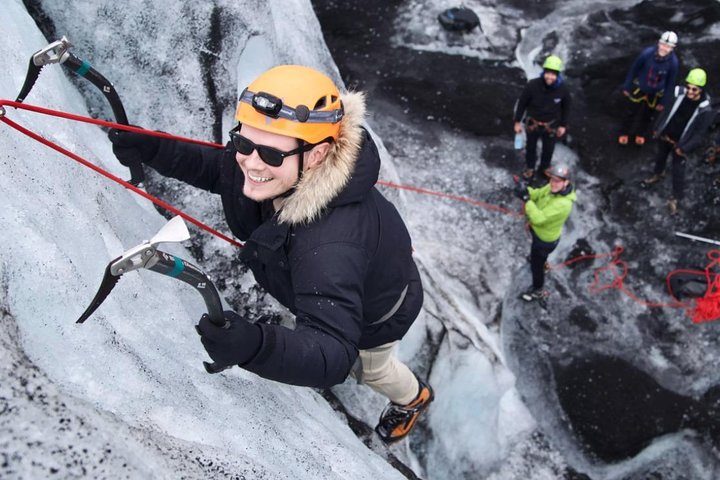
Climbing a Living Glacier: Sólheimajökull’s Vertical World
Learn to swing an ice tool on a living glacier and walk away with both skill and perspective
The first thing you notice as the van eases off the ring road is the color: a hard, ancient blue that looks like light filtered through old glass. The ice sits in the valley like a pale animal breathing slowly, its crevasses yawning and closing with a rhythm that feels almost deliberate. On a clear morning the wind carries snow dust across the glacier’s skin, and the world narrows to crampons, rope, and the one clean line of possibility leading up a sheer ice wall. This is Sólheimajökull — a living, moving glacier in southern Iceland that dares the curious to test vertical ice.
Trail Wisdom
Layer for changeable weather
Bring a breathable shell, an insulating mid-layer, and thin dexterous gloves to adjust quickly on the ice.
Trust your crampons and tools
Let guides coach your footwork and tool placements—momentary hesitation increases fatigue and risk.
Protect your phone
Cold and bumps are hard on electronics—use a dry bag or keep devices close to your body.
Hydrate before and after
Cold suppresses thirst; sip fluids frequently and bring a high-calorie snack for the return to base.
Local Knowledge
Hidden Gems
- •Walk the black sand at Sólheimasandur near the plane wreck for a contrasting landscape
- •Visit nearby Gljúfrabúi waterfall, hidden behind a narrow canyon for a quieter waterfall experience
Wildlife
Arctic fox (rare), Various seabirds along the coast including puffins in season
Conservation Note
Sólheimajökull is retreating due to climate change—respect marked routes, avoid collecting ice samples, and pack out all waste to reduce local impact.
The glacier is an outlet of Mýrdalsjökull, which overlies the Katla volcanic system; ash bands in the ice record past eruptions.
Seasonal Guide
spring
Best for: Stable daylight, Accessible ice formations
Challenges: Variable melt, Cold nights
Spring brings long days and firm ice early in the season; expect rapidly changing conditions as temperatures rise.
summer
Best for: Mild temperatures, Long daylight hours
Challenges: Increased melt, Potential for soggy moraines
Summer offers comfortable air temps and excellent visibility, though ice features soften in the afternoon.
fall
Best for: Fewer crowds, Crisper ice
Challenges: Shortening daylight, Unpredictable storms
Fall tightens the window for climbs but rewards early-season solidity and dramatic light for photos.
winter
Best for: Unique ice sculptures, Solitude
Challenges: Extreme cold, Limited daylight
Winter tours highlight sculpted ice and quiet expanses but require robust gear and weather flexibility.
Photographer's Notes
What to Bring
Waterproof shell jacketEssential
Protects from wind and melt spray while allowing active movement.
Insulating midlayerEssential
Keeps core warm between climbs and during pauses.
Sturdy hiking boots (rigid sole)Essential
Compatibility with crampons and solid ankle support for uneven ice and moraine.
Gloves with dexterityEssential
Thin liner plus warmer outer gloves let you manipulate tools and ropes efficiently.
Common Questions
Do I need prior climbing experience?
No prior experience is required; guides provide instruction for beginners and scale challenges for more advanced guests.
How cold does it get on the glacier?
Temperatures are typically 0–10°C in summer and can drop well below freezing in winter; wind chill can make it feel colder, so layer appropriately.
What is the maximum group size?
Guides usually limit groups to six participants to ensure safety and personalized instruction.
Are kids allowed on the tour?
Age policies vary by operator; many require participants to be at least 12–14 years old and capable of following safety instructions.
Is the activity refundable or reschedulable?
Operators commonly offer flexible cancellation for weather-related changes—confirm the specific policy at booking.
Do you provide gear?
Yes; reputable tours supply helmets, harnesses, crampons, and ice tools—bring your own boots and base layers.
What to Pack
Sturdy hiking boots (for crampon compatibility), insulated midlayer (warmth during pauses), waterproof shell (protection from melt and wind), snacks/water (maintain energy on ice)
Did You Know
Sólheimajökull has retreated more than a kilometer since the late 20th century, leaving visible moraines that track the glacier's recent history.
Quick Travel Tips
Book tours in advance during summer, bring your own boots, expect variable cell service near the glacier, plan soups or hot drinks after the tour in Vík
Local Flavor
After the climb, head to Vík for lamb stew or a lamb soup at a local café, sample Icelandic rye bread, and warm up with a craft beer at a guesthouse where locals trade weather stories.
Logistics Snapshot
Closest airport: Keflavík International Airport (KEF) / Drive to trailhead: ~2–2.5 hours from Reykjavík; Driving distance from Vík: 20–30 minutes / Cell service: intermittent near glacier / Permits: none required for guided tours
Sustainability Note
Glacier ecosystems are fragile and retreating; stay on marked paths where provided, use established operators that follow Leave No Trace principles, and avoid disturbing meltwater streams.
Continue Reading

Close to the Clouds: Climbing Mount Meru’s Volcanic Ridges
A three- to four-day climb through montane forest, volcanic ash, and alpine ridgelines—Mount Meru offers wildlife, technical fitness challenges, and sweeping summit views a short drive from Arusha.
Arusha, Arusha Region

Vertical Limestone: A Half-Day Climb at Batu Caves
Spend a compact morning learning to read limestone and push your limits on 30‑meter routes at Batu Caves. This half-day guided climb pairs technical coaching with a culturally rich setting—perfect for first-timers and seasoned climbers seeking quick, high-quality vertical time.
Kuala Lumpur, Selangor