
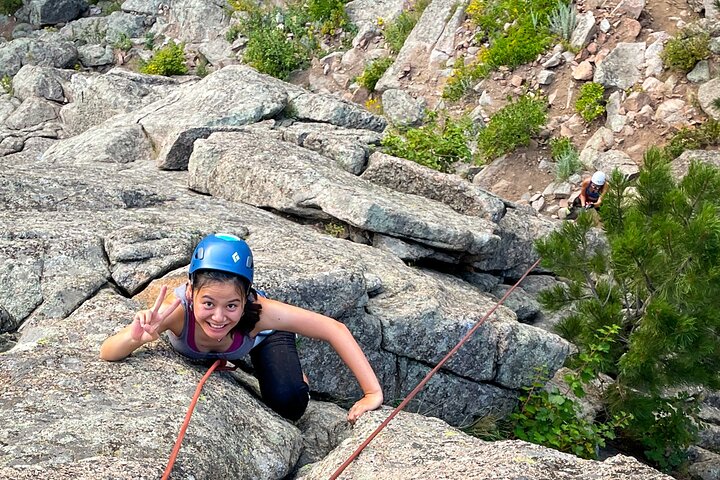
Edge of the Flatirons: A Private Rock-Climbing Day Above Boulder
Private coaching on real rock—gain confidence, master movement, and top out with a guide who knows Boulder
You step out of the van and the world rearranges itself: city hum fades, air thins and sharpens, and slabby bands of sandstone—the Flatirons—tilt upwards like a series of open books. The guide tightens your harness with a practiced motion; ropes hum softly as they coil. For the next four hours you trade traffic lights for belays, office chair posture for foot-first movement on vertical rock. This is a Boulder morning that asks something of you and gives something back: focus, rhythm, and a view that rewards each shove of the legs.
Trail Wisdom
Hydration and Snacks
Bring 1–2 liters of water and calorie-dense snacks; a short day can dehydrate you quickly in Colorado’s dry air.
Shoe Choice
Wear sticky-soled approach or rental climbing shoes for better friction and foot precision on sandstone.
Sun Protection
Use high-SPF sunscreen and a brimmed hat; the sun at elevation is stronger and exposure on ledges is direct.
Listen to Your Guide
Ask questions early—guides tailor instruction to your comfort and will stop or slow the session if you need more time.
Local Knowledge
Hidden Gems
- •Flagstaff Mountain picnic areas with quieter viewpoints
- •Short approach crags on the Boulder Rim less frequented by tourists
Wildlife
Golden eagles and red-tailed hawks, Mule deer
Conservation Note
Many local climbs have seasonal closures to protect nesting raptors; follow Leave No Trace and local access rules to keep routes open.
Boulder’s climbing tradition dates back to early 20th-century students and outdoor clubs; the Flatirons and nearby crags have been training grounds for generations of climbers.
Seasonal Guide
spring
Best for: Cool-weather climbing, Learning rope skills, Fewer insects
Challenges: Possible raptor nesting closures, Unpredictable afternoon storms, Chilly mornings
Spring offers crisp mornings and good friction on rock, but keep an eye on nesting closures and sudden rain which can slick sandstone.
summer
Best for: Long daylight hours, Night climbs in cool evenings, Consistent guide availability
Challenges: High daytime temps, Crowds on popular routes, Thunderstorms in afternoons
Summer brings reliable scheduling and longer days—plan for early starts to avoid heat and storms that build in the afternoon.
fall
Best for: Ideal temperatures, Clear skies and views, Lower crowds
Challenges: Cooler mornings, Shortening daylight, Occasional early snow at higher elevations
Fall is the sweet spot: cooler, stable weather and excellent friction on the rock—prime months for guided learning.
winter
Best for: Technique practice on sheltered routes, Private instruction without crowds, Confidence-building in cold conditions
Challenges: Cold rock and icy approaches, Reduced route availability, Short days
Winter sessions are possible on lower-elevation, sun-exposed climbs—expect cold rock and plan for shorter, more focused sessions.
Photographer's Notes
What to Bring
Climbing shoes (or rentals)Essential
Provide the friction and sensitivity needed to move confidently on rock.
Harness and helmet (often provided)Essential
Essential safety equipment—confirm with your guide whether rentals are included.
Hydration pack (1–2L)Essential
Keeps water accessible on sunny approaches and during rests.
Layered clothing and sun hatEssential
Fast-changing Colorado weather means layers and sun protection are vital.
Common Questions
Do I need prior climbing experience?
No—this private session is designed for beginners and those seeking a refresher; guides will teach knots, belaying, and basic movement.
Is gear included in the price?
Most guides provide ropes, harnesses, helmets, and technical gear; confirm shoe rental availability when booking.
How many people are in a private tour?
The tour is private—typically just you (or your party) and the guide, which allows individualized pacing and instruction.
What should I wear to climb?
Wear flexible, close-fitting clothing you can move in, sticky-soled shoes or bring money for rentals, and a sun hat for exposed belays.
Are climbs safe for children or teens?
Minors can climb with a guardian; age and ability requirements vary—check with the operator for minimum age and weight limits.
What happens in bad weather?
Guides monitor forecasts; sessions may be rescheduled for thunderstorms or dangerous conditions. Light rain can make rock unsafe, so flexibility is important.
What to Pack
Climbing shoes or rentals (better friction), Harness & helmet (safety), Hydration pack (1–2L for elevation and dryness), Sun protection (hat & SPF for exposed belays)
Did You Know
The Flatirons are part of the Fountain Formation—rock laid down roughly 290–300 million years ago—giving Boulder its distinctive tilted sandstone slabs.
Quick Travel Tips
Book morning sessions to avoid afternoon storms; confirm gear inclusions before arrival; bring small cash or card for parking or donations; wear grippy shoes for the approach.
Local Flavor
After a climb, head to Pearl Street for a meal and local beer—try the Mountain Sun Pub & Brewery for hearty post-climb food or the Dushanbe Tea House for something lighter and beautiful. Both are 10–20 minutes from downtown Boulder and offer an easy decompression from the crag.
Logistics Snapshot
Closest major airport: Denver International (DEN) ~45–60 minutes drive; Closest municipal airport: Boulder Municipal (limited service). Typical drive from downtown Boulder: 15–25 minutes to many climbing areas; Cell service: patchy in canyon sections; Permits/passes: usually none for most climbs, but check seasonal closures and trailhead parking rules.
Sustainability Note
This area has important raptor nesting closures—observe posted dates, stay on established trails, and pack out all trash to protect habitat and keep climbing areas open.
Continue Reading

Close to the Clouds: Climbing Mount Meru’s Volcanic Ridges
A three- to four-day climb through montane forest, volcanic ash, and alpine ridgelines—Mount Meru offers wildlife, technical fitness challenges, and sweeping summit views a short drive from Arusha.
Arusha, Arusha Region

Vertical Limestone: A Half-Day Climb at Batu Caves
Spend a compact morning learning to read limestone and push your limits on 30‑meter routes at Batu Caves. This half-day guided climb pairs technical coaching with a culturally rich setting—perfect for first-timers and seasoned climbers seeking quick, high-quality vertical time.
Kuala Lumpur, Selangor