
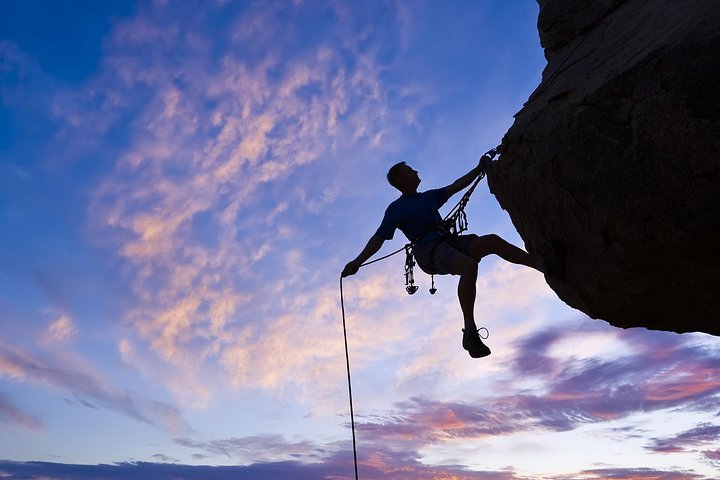
Level Up on Real Rock: The Outdoor Rock Climbing — Level 2 Clinic
Four hours to master belaying and outdoor rope skills that let you climb outside with confidence.
You step onto a sun-warmed slab of sandstone and the world narrows to two hands, a pair of feet, and the subtle rhythm of breath. The trees around you—live oaks and madrone—lean in as if to listen. Below, the valley stretches toward Silicon Valley; above, the ridge holds sky like an open promise. This is not a gym. The holds are older than your training log, and the wind has an opinion about the moves you make. If you’ve graduated from a beginner’s course or already know your figure-eight knot from your harness setup, the next sensible progression is to learn what actually keeps a partner safe on the cliff: competent, confident belaying and real-world rope management. The Outdoor Rock Climbing - Level 2 clinic is four hours of focused coaching that bridges that exact gap.
Trail Wisdom
Hydrate and carry extra
Bring at least 1.5–2 liters of water—you’ll be more focused and safer when you’re well-hydrated during technical drills.
Wear grippy shoes
Use well-broken climbing shoes, not new pairs; your footwork matters more than brute force on sandstone.
Practice partner checks
Run full partner-safety checks every time—harness buckles, knot tails, and belay device orientation—before stepping onto the rock.
Respect wildlife closures
Observe seasonal closures for nesting raptors and avoid climbing on restricted routes to protect local habitat.
Local Knowledge
Hidden Gems
- •Short scramble atop a nearby sandstone fin with panoramic valley views
- •A shaded picnic ledge tucked behind a madrone grove—ideal for a post-clinic debrief
Wildlife
Red-tailed hawk, Black-tailed deer
Conservation Note
Climbers should avoid placing new bolts unless sanctioned, stick to durable surfaces, and pack out all tape and trash to preserve fragile sandstone and habitat.
The Santa Cruz Mountains have been shaped by coastal uplift and human use for millennia—from Ohlone stewardship to 20th-century state park protection.
Seasonal Guide
spring
Best for: Cool climbing conditions, Wildflower displays
Challenges: Possibly muddy approaches, Variable temperatures
Spring offers cool, sticky rock and active wildlife; be prepared for muddy parking areas after rains and dress in layers.
summer
Best for: Long daylight hours, Dry rock
Challenges: Heat on exposed faces, Crowded weekends
Summer gives predictable dry rock but brings heat and more visitors—early starts beat the crowds and the mid-day sun.
fall
Best for: Stable weather, Clear views
Challenges: Shorter daylight, Cooler mornings
Fall is often the most consistent season for comfortable temps and steady friction; plan for cooler mornings and shorter windows of daylight.
winter
Best for: Quiet crags, Fresh perspectives
Challenges: Rainy or windy days, Slippery rock after storms
Winter can yield empty crags and good training days between storms, but avoid climbing on wet sandstone for safety and conservation reasons.
Photographer's Notes
What to Bring
Climbing shoesEssential
Precision footwear improves foot placement and confidence on small edges and smears.
HelmetEssential
Protects from rockfall and unexpected slips during outdoor practice.
Belay device and locking carabinerEssential
If you own your own, bring them to practice consistent setups; guides often provide equipment if needed.
Hydration pack or 2L waterEssential
Keeps you focused and prevents fatigue during sustained instruction.
Common Questions
Do I need prior outdoor climbing experience?
You should be comfortable with basic climbing safety—figure-eight knot, harness fit, and top-rope climbing—either from a beginner course or gym experience; the clinic builds on those skills.
Is gear provided or do I need to bring equipment?
Guides typically supply ropes, helmets, and some hardware; bring your own shoes, harness, and belay device if you prefer a consistent personal setup.
What is taught during the clinic?
Expect a review of core safety skills followed by ground-school instruction in traditional belaying, anchor evaluation, lowering techniques, and practical rope management on real rock.
How many people are in a class?
Groups are kept small to maximize hands-on time—usually between 4–8 participants—so you get individualized coaching.
Can I climb after the clinic without a guide?
The clinic aims to build practical competence, but independent climbing also requires judgement; consider pairing the course with supervised outings before leading unroped climbs on unfamiliar terrain.
Are there age or weight limits?
Specific age and weight policies vary by operator; check the booking page for minimum age and harness size guidelines before registering.
What to Pack
Climbing shoes (precision on rock), Helmet (safety from rockfall), Water (1.5–2L for hydration), Sunscreen and layered top (sun and cooling shade)
Did You Know
Castle Rock State Park protects more than 5,000 acres of the Santa Cruz Mountains and is known for its distinctive sandstone outcrops that formed from ancient marine sediments.
Quick Travel Tips
1) Arrive early to secure parking; 2) Check the park day-use fee policy; 3) Download offline maps—cell service is spotty; 4) Wear shoes with traction for the approach.
Local Flavor
After a day on the rock, head to downtown Los Gatos for a burger or pizza, or try a local IPA at a nearby craft brewery in Saratoga; farm-to-table cafes in the valley make for a relaxed post-climb meal.
Logistics Snapshot
Closest airport: San Jose Mineta (SJC). Typical driving time: 30–50 minutes from downtown San Jose. Trailhead/meeting area: Castle Rock State Park parking (check operator confirmation). Cell service: intermittent on ridgelines. Permits/passes: state park day-use fee/parking may apply; no special climbing permit typically required but follow park regulations.
Sustainability Note
Sandstone is fragile—avoid climbing on wet rock, use established trails, and pack out all tape and trash; respect bird-nesting closures and local bolting ethics to keep crags open.
Continue Reading

Close to the Clouds: Climbing Mount Meru’s Volcanic Ridges
A three- to four-day climb through montane forest, volcanic ash, and alpine ridgelines—Mount Meru offers wildlife, technical fitness challenges, and sweeping summit views a short drive from Arusha.
Arusha, Arusha Region

Vertical Limestone: A Half-Day Climb at Batu Caves
Spend a compact morning learning to read limestone and push your limits on 30‑meter routes at Batu Caves. This half-day guided climb pairs technical coaching with a culturally rich setting—perfect for first-timers and seasoned climbers seeking quick, high-quality vertical time.
Kuala Lumpur, Selangor